
Our Popcorn Ceiling Removal Process
Exactly what happens from the first walkthrough to the final coat of paint, and why each step matters for a smooth, clean result.
Get a Free Quote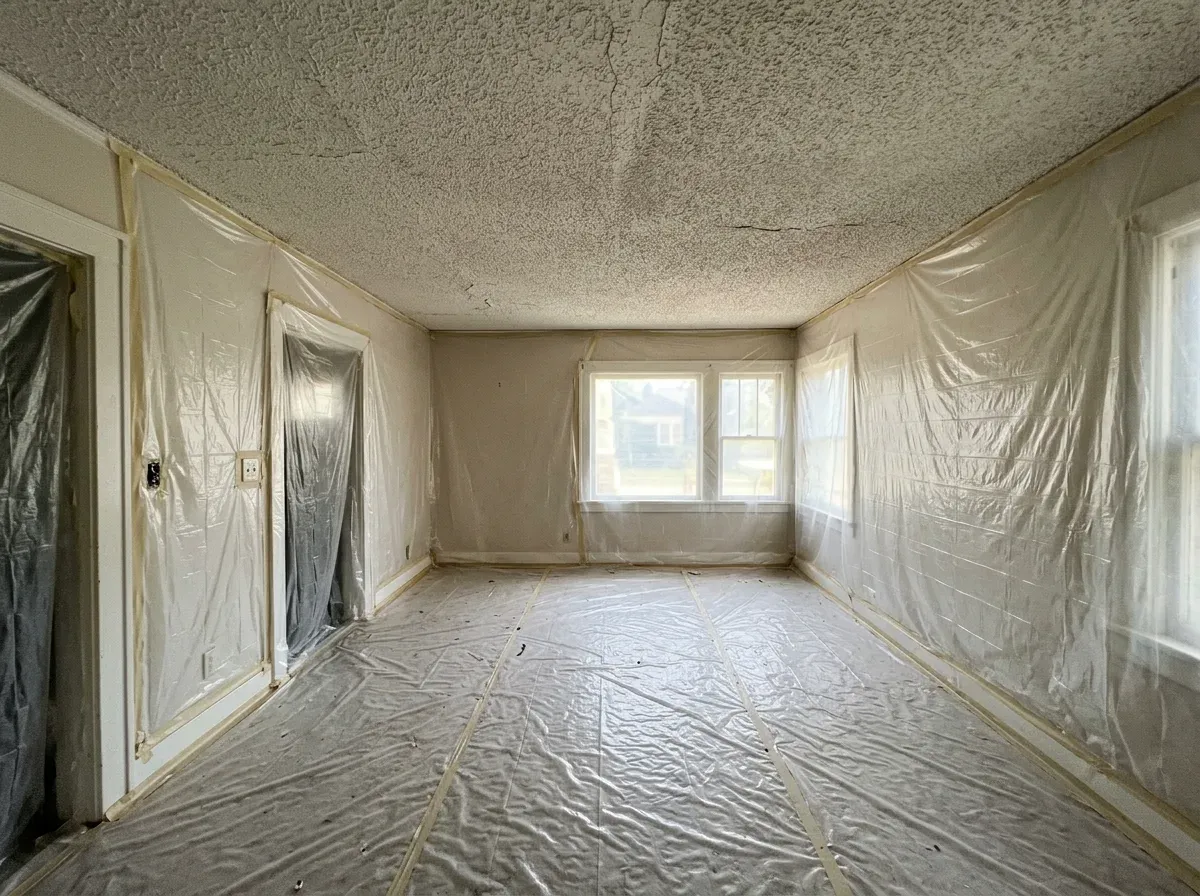
A messy job, done cleanly
Removing popcorn texture is wet, dusty, physical work. The difference between a job you're happy with and one you regret usually comes down to the steps nobody sees: testing before scraping, sealing the room properly, and taking the time to skim and sand until the ceiling is truly flat.
Here's how Cheyenne Popcorn Removal handles every project, whether it's one bedroom or a whole house. Your quote tells you which steps your package includes. Scrape & prep stops after cleanup and a light sanding, smooth & primed stops after primer, and turnkey goes all the way through paint.
Step by step
Nine steps from dated texture to a finished ceiling.
1. Walkthrough and quote
We visit, measure each room, check ceiling height and look for water stains, cracks or loose seams. You get a written quote naming the package, price and schedule. We'll also confirm whether your project needs a permit with the City of Cheyenne Building Permits Division or Laramie County Planning & Development.
2. Sample testing
If your ceiling went up before 1986, we arrange sample testing through an accredited lab or inspector before any scraping. Lab testing starts at about $250. If a sample is positive, we stop, and the removal goes to a properly trained asbestos abatement contractor. If it's negative, we schedule the work.
3. Protection and containment
Furniture is moved out or grouped and covered. Floors get plastic sheeting, walls are draped from the ceiling line down, and doorways are sealed so dust stays in the room. Vents are covered and the HVAC is turned off in the work area. Light fixtures and fans are taken down or protected.
4. Wetting and scraping
We mist the texture with water in sections and let it soak in, which softens it and keeps dust down. Then we scrape it off with wide blades. Painted popcorn resists water, so it takes longer and sometimes extra passes. We take care not to gouge the drywall paper underneath.
5. Cleanup and disposal
Wet texture falls onto the plastic, which is rolled up and bagged with the debris. Bags are hauled away, and non-asbestos construction debris goes to the City of Cheyenne Happy Jack Landfill, which accepts construction and demolition waste. Rooms are vacuumed before finishing starts.
6. Skim coat
For a smooth finish, we apply thin coats of joint compound over the whole ceiling, filling scrape marks, seams and old fastener pops. Cheyenne's dry, high-altitude air makes compound set and dry fast, so we mix in small batches, work quickly and keep each pass thin to avoid lap marks and cracking.
7. Sanding
Once each coat is dry, we sand it flat with pole sanders and check it with a work light held at a low angle, which shows ridges and dips the eye would miss. Low spots get another thin pass. Dust from sanding stays inside the containment and is vacuumed as we go.
8. Prime and paint
Primer seals the new compound so paint goes on evenly and doesn't flash. On smooth & primed jobs we stop here. On turnkey jobs we roll on ceiling paint, usually two coats of flat white, which hides minor imperfections best. If you chose knockdown or orange peel, the new texture is sprayed before priming.
9. Final walkthrough
We remove the plastic, reinstall fixtures, vacuum and walk every room with you in good light. If you spot something you're not happy with, point it out and we'll take care of it before we call the job done.
Working in Cheyenne's dry climate
Cheyenne gets only about 16 inches of precipitation a year, and humidity is often low. That's good news for drying times: skim coats can be ready to sand much sooner than they would be in a humid climate. It also means joint compound starts setting on the hawk and the ceiling faster, so a crew that works slowly in thick coats ends up with ridges, lap marks and shrinkage cracks.
Our approach is thin passes, small batches and quick, even spreading. It takes discipline, but it's what produces a ceiling that looks flat under a low-angle light.
How long does it take?
A single bedroom is often scraped and skim coated in a day or two, with sanding, priming and paint after that. A whole 1,200 sq ft ranch usually takes several working days, since rooms are done in sequence and each skim coat needs to dry. Painted popcorn, tall or vaulted ceilings and drywall repairs add time. Your written quote includes a realistic schedule so you can plan around it.
Want to know the price? See the cost guide and calculator.
Before you book: a few things you can do
- Clear small items, decor and anything fragile from the rooms
- Take down curtains and wall hangings near the ceiling
- Plan where pets will stay on work days
- Find out when your home was built, which helps us plan testing
- Note any past roof leaks or ceiling stains
Questions about asbestos? Read about how sample testing works. Want a different look than flat? See knockdown and orange-peel texture or smooth ceiling finishes.
Ready for smooth ceilings?
Free written quotes across Cheyenne, Laramie County and nearby towns.